









Byafshena
The Perfect Curve: Why the Parabola is Fundamental to Space Science
Share your love
The parabola, a simple U-shaped curve defined by a set of mathematical rules, is one of the most critical shapes in space science, engineering, and astrophysics. Its unique geometric property of reflection makes it indispensable for two primary functions: gathering and focusing distant signals and describing motion under the influence of gravity.
1. Paraboloid Reflectors: Collecting and Projecting Energy
In three dimensions, rotating a parabola around its axis of symmetry creates a shape called a paraboloid (sering disebut piringan atau dish). This shape is the backbone of almost all instruments used for deep space communication and astronomical observation.
The Focusing Property
The key scientific principle is the parabolic reflection property:
- Any wave (light, radio, sound) that strikes the interior of the paraboloid parallel to its axis is reflected to a single point called the focus.
- Conversely, any energy emitted from a source placed exactly at the focus is reflected outward in a perfectly collimated (parallel) beam.
Space Applications
This property is exploited across various space technologies:
- Radio Telescopes and Satellite Dishes: Massive parabolic antennas are used on Earth and spacecraft (seperti milik NASA’s Deep Space Network) to collect and concentrate extremely faint radio signals from distant spacecraft or celestial objects. By focusing the weak, incoming plane wave signals onto a small receiver placed at the focus, the signal is significantly amplified.
- Reflecting Telescopes: Large optical and infrared telescopes use parabolic mirrors to gather light from stars and galaxies, focusing it onto detectors for study. This precision focusing is what allows for clear images of distant objects.
- Spacecraft Thrusters and Antennas: Conversely, the collimating property is used to transmit radio waves from a spacecraft’s antenna in a tightly focused, narrow beam back to Earth, ensuring maximum power delivery across vast interstellar distances.
2. Parabolic Trajectories: The Path of Motion
The parabola is also central to orbital mechanics and ballistics, though in a slightly different context.
Projectile Motion on Earth
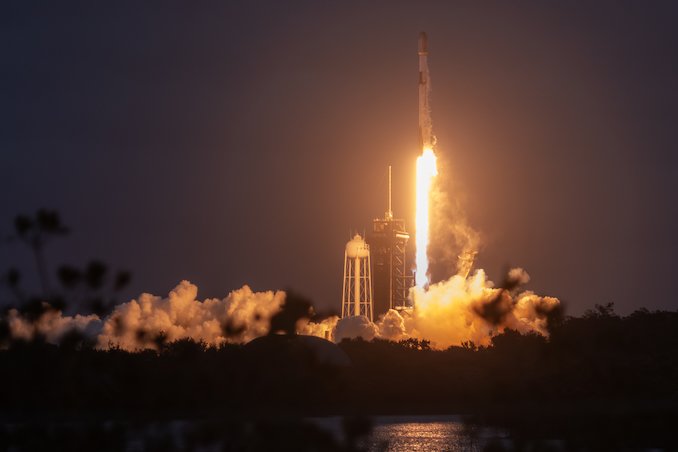
On Earth, the path followed by a projectile (like a rocket before it leaves the atmosphere, neglecting air resistance) is a parabolic trajectory due to the constant downward acceleration of gravity.
Escape Velocity and Unbound Orbits
In astrodynamics, a parabolic trajectory is a specific type of orbit defined by an eccentricity ($e$) exactly equal to 1. This is an unbound orbit that sits on the critical boundary between elliptical orbits ($e < 1$, which are bound and return) and hyperbolic orbits ($e > 1$, which are also unbound and escape).
- A spacecraft following a parabolic trajectory has precisely the escape velocity for that point in space. It will coast away from the central body (like a planet or a star) and its velocity will tend toward zero as it reaches an infinite distance.
- Parabolic trajectories represent the minimum-energy path required for a spacecraft to escape a gravitational field and never return. Any increase in velocity beyond the parabolic path results in a hyperbolic trajectory, which requires more energy.
In essence, the parabola serves as both the funnel to concentrate cosmic information and the mathematical map to describe the motion of objects traveling through space, making it a foundational concept in humanity’s exploration of the cosmos.