Breaking News



Popular News



Enter your email address below and subscribe to our newsletter

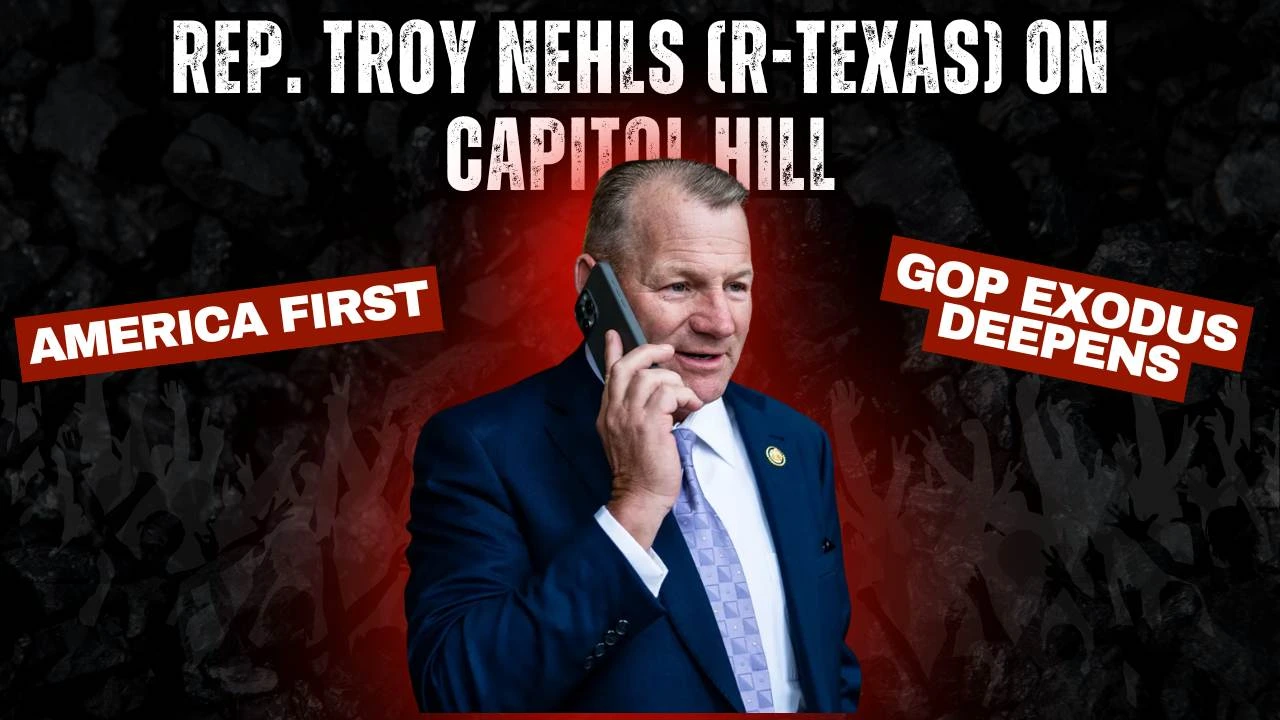
The political earthquake on Capitol Hill just registered another major aftershock. Despite the fierce loyalty of his base, another key member of Congress—Rep. Troy Nehls (R-Texas), one of Donald Trump’s most reliable allies—has unexpectedly announced he is quitting, rather than seeking re-election in 2026. This sudden departure isn’t an isolated incident; it’s the latest development in a deepening GOP Exodus that is reshaping the balance of power and signaling profound turmoil within the Republican ranks. What is driving these prominent legislators away, and who is ready to step into the void left by this powerful Trump-aligned figure?
The political landscape in the United States Congress is undergoing a significant shake-up, marked by a noticeable trend of members from both major parties choosing not to seek re-election. This phenomenon, often dubbed the “Exodus from Capitol Hill,” signals deeper dissatisfaction or perhaps strategic repositioning ahead of the critical 2026 electoral cycle. The latest high-profile departure underscores this shifting dynamic: Representative Troy Nehls (R-Texas), a staunch supporter and reliable ally of President Donald Trump, announced his decision to retire from the House of Representatives rather than pursuing another term.
Nehls’s announcement, delivered just after the Thanksgiving holiday, adds his name to a rapidly swelling list of House Republicans and Democrats who are choosing to step away from the rigors of legislative life. These departures are crucial not only for the members’ personal reasons—whether seeking higher office, returning to private life, or focusing on family—but also because they fundamentally reshape the political map and the balance of power within the next Congress.
This comprehensive analysis delves into the implications of Nehls’s retirement, explores the broader context of recent resignations, and examines the political maneuvering already underway to fill the now-open Texas congressional seat.
Elected in 2020, Rep. Troy Nehls quickly established himself as a prominent and unwavering figure in the pro-Trump wing of the Republican Party. Representing Texas, a state pivotal to the GOP’s national strategy, Nehls’s voice was often heard defending the former President’s agenda and actions. His decision to retire, therefore, sends a powerful signal about the current state of Washington politics and the personal toll it takes on its participants.
In a statement released shortly after the Thanksgiving break, Nehls cited familial obligations as the primary motivator for his departure.
“I have made the decision, after conversations with my beautiful bride and my girls over the Thanksgiving holiday, to focus on my family and return home after this Congress,” Nehls stated.
While the phrase “focus on family” is a common trope in political retirement announcements, for a Congressman first elected relatively recently, the quick decision to step away suggests an intense period of reflection and prioritization.
Demonstrating the strength of his allegiance and their personal relationship, Nehls confirmed that he personally informed the former President of his plans before making the public announcement.
“Before making this decision, I called President Trump personally to let him know of my plans. President Trump has always been a strong ally for our district and a true friend, and I wanted him to hear it from me first.”
This gesture highlights the significant role that Donald Trump continues to play in the career trajectories and political calculations of key Republican figures, even those choosing to leave the national stage. Nehls’s departure leaves a void, but his immediate endorsement of his successor indicates a clear desire for the “America First” agenda to persist in his district.
Read More : The Sound of Change: A Child’s Voice Amplified in Political Discourse
Rep. Nehls’s retirement is not an isolated event; rather, it is part of a larger, noticeable trend gripping Capitol Hill. The growing list of members choosing to “call it quits” spans both sides of the aisle, driven by a myriad of factors including legislative gridlock, hyper-partisanship, and the relentless nature of modern political campaigning.
Nehls’s announcement was preceded by other significant departures and rumored resignations within the Republican conference, underscoring a period of internal volatility for the Grand Old Party (GOP).
The contrasting reasons behind these departures—from frustration with policy (Bacon) to internal party dynamics (Greene) and family focus (Nehls)—illustrate the multifaceted pressures facing contemporary legislators.
The cumulative effect of these resignations is two-fold:
Within hours of Troy Nehls’s announcement, the focus immediately shifted to the succession plan for Texas’s increasingly competitive district. The solution was surprisingly close to home, maintaining the family legacy and the established political brand.
Troy Nehls’s identical twin brother, Trever Nehls, quickly announced his intention to run for the newly vacated seat. This move suggests a highly coordinated and strategic handover of political power.
In a dedicated post on social media, Trever Nehls laid out his immediate platform, assuring voters of a commitment to continuity:
“I know this district. And, this district knows me. I will work every day to earn your trust and carry on the tradition of America First leadership that our outgoing Congressman Troy Nehls set.”
The platform clearly centers on maintaining the populist “America First” principles that defined his brother’s tenure, leveraging both name recognition and ideological alignment with the district’s conservative base.
Solidifying the transition, Troy Nehls swiftly endorsed his brother’s candidacy, leveraging his current political capital to clear the primary field for Trever. This immediate endorsement is a powerful tool designed to deter other potential Republican challengers and ensure that the seat remains safely in the hands of a candidate aligned with the Trump wing of the party.
The retirement of Rep. Troy Nehls, while a personal decision, serves as a significant marker in the pre-2026 political calendar. It highlights the growing challenges of serving in a hyper-partisan Congress and the calculated decisions being made by elected officials regarding their future.
The ensuing race for his Texas seat, now featuring his twin brother Trever Nehls, will be a key barometer of the enduring strength of the “America First” movement at the district level. As the list of congressional retirements continues to lengthen, the political strategies, internal dynamics, and ideological future of both the Republican Party and the U.S. Congress remain in sharp focus for the pivotal 2026 midterms.
The coming months will demonstrate whether the current wave of departures signals a crisis of governance or simply a strategic repositioning of ambitious politicians seeking different roles on the national stage.






[…] Trump Ally Troy Nehls Quits Congress: The Growing GOP Retirement Trend […]
[…] Trump Ally Troy Nehls Quits Congress: The Growing GOP Retirement Trend […]