Breaking News




Popular News

Enter your email address below and subscribe to our newsletter

 Byafshena
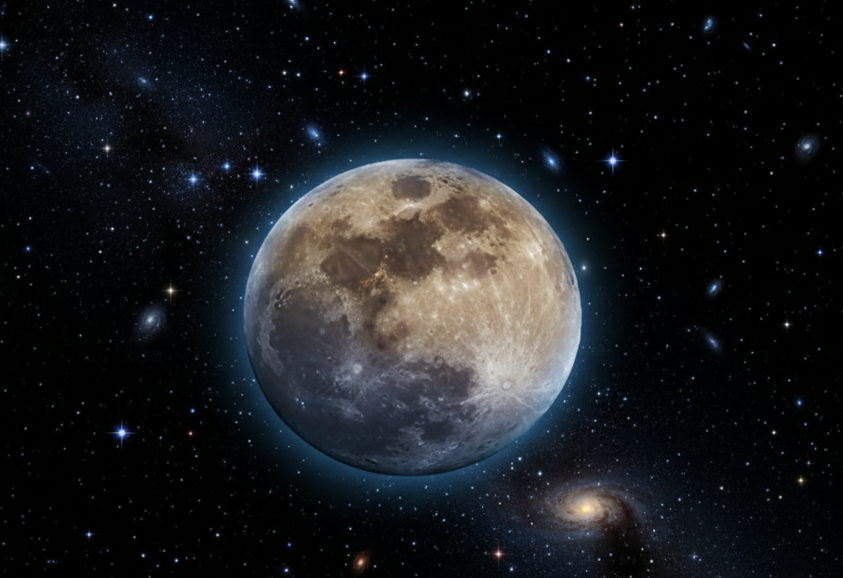
Keep your gaze fixed upon the heavens this week, for the celestial calendar is preparing for a grand, final spectacle: the December full supermoon. Marking the conclusion of a remarkable sequence of perigean full moons this year, this event is more than just a beautiful sight; it is a convergence of astronomical mechanics, rich cultural history, and the profound legacy of human space exploration. Known traditionally as the Cold Moon, this particular full moon will achieve its peak illumination around 6:14 p.m. ET on Thursday, according to leading astronomical sources like EarthSky, though its seemingly full disc will grace the night sky throughout Wednesday and Friday evenings.
This supermoon is the last of three back-to-back occurrences that have punctuated the latter half of the orbital year, serving as a climactic celestial punctuation mark before the winter season truly sets in. Its arrival is a timely reminder of the cosmic dynamics that govern our closest neighbor and its ever-changing relationship with our planet.
The term “supermoon” is not a formal scientific designation but a widely accepted term in popular astronomy, coined by astrologer Richard Nolle in 1979. Astronomically, it refers to a perigean full moon—a full moon that occurs when the Moon is at or very near perigee, the point in its elliptical orbit closest to Earth.
The Moon’s orbit is not a perfect circle but an ellipse, meaning the distance between Earth and the Moon constantly fluctuates. At its farthest point, known as apogee, the Moon is approximately $405,500$ kilometers away. Conversely, at perigee, this distance shrinks to about $363,300$ kilometers. This difference of over $42,000$ kilometers is substantial enough to noticeably alter the Moon’s appearance from our perspective.
When the moment of a full moon (the phase when the Moon is exactly $180^\circ$ opposite the Sun) coincides within approximately 90% of the Moon’s closest approach to Earth, the conditions for a supermoon are met.
The effect on appearance is subtle but measurable. A supermoon can appear up to 14% larger and up to 30% brighter than the faintest, or “micromoon,” which occurs when the full moon is near apogee. While the casual observer might not perceive the size difference unless comparing side-by-side photos, the increase in luminosity is often palpable, especially on a clear winter night.
As Noah Petro, project scientist for NASA’s upcoming Artemis III mission, explained, the geometry of a full moon is simple yet elegant: “On Thursday, the moon will rise right around sunset time, and that’s why it’s full, because it’s exactly opposite in the sky from where the sun is.” This precise alignment, known technically as a syzygy (the alignment of three celestial bodies), maximizes the sunlight reflecting off the lunar surface toward Earth, culminating in the dazzling brilliance of the full phase.
While the astronomical definition of the event is the supermoon, its traditional and cultural identity is the Cold Moon. This moniker, like many names assigned to the monthly full moons, originated from Native American and early colonial traditions, reflecting environmental conditions pertinent to survival and agriculture.
The Cold Moon specifically earns its name because it is the full moon event that occurs closest to the winter solstice. The solstice, which typically falls around December 21st, marks the astronomical beginning of winter in the Northern Hemisphere and is the shortest day of the year. The name starkly reflects the deep chill and dramatic drop in temperature that characterizes this period, a time when the long, dark nights are dominant and frost and snow begin to truly take hold.
The naming tradition showcases the depth of observation possessed by Indigenous tribes across North America, who relied on the lunar cycle to track time and seasons. While the Cold Moon is the most common designation, the December moon boasts a rich tapestry of other names, each offering a window into the ecological and cultural realities of the people who used them:
These names underscore that the full moon was not merely a date on a calendar but a vital environmental indicator, signaling when to prepare for the deepest part of winter, hunt specific game, or conserve dwindling supplies. The sight of the Cold Supermoon, therefore, connects us to millennia of human reliance on the precise rhythm of the heavens.
The timing of this particular supermoon, occurring so near the solstice, also enhances its visual presence in the sky. As Petro noted, the brightness of winter supermoons can be unexpectedly intense: “The brightness of these supermoons in the winter, especially when it’s really cold, like it is now, I think can be enhanced because the trees aren’t blocking the light.”
This is not only due to the lack of foliage but also to atmospheric conditions. Winter air, especially in colder, drier climates, often holds less moisture and dust than summer air. This results in a cleaner, clearer atmosphere, allowing the moonlight to travel through the column of air to our eyes with less scattering and dimming, making the already enhanced brightness of the supermoon appear even more striking against the black canvas of the longest nights.
December’s full moon holds a unique position in the history of space exploration, orbiting close to the anniversaries of two of NASA’s most pivotal human missions: Apollo 8 and Apollo 17. Viewing the Cold Supermoon this week offers a profound opportunity to reflect on the historic achievements that define our relationship with the Moon.
Launched on December 21, 1968—coincidentally, the day of the winter solstice—Apollo 8 achieved what was, at the time, an almost unimaginable feat: sending a crew of three astronauts into lunar orbit. This mission was a breathtaking gamble and a monumental psychological victory for the United States during the height of the Space Race.
Astronauts Frank Borman, Jim Lovell, and William Anders orbited the Moon ten times, successfully testing the crucial navigation and communication systems necessary for a future landing. But the mission’s enduring legacy rests on its emotional and cultural impact. On Christmas Eve, 1968, as they broadcast from lunar orbit, the crew shared a special holiday message with Earth, reading from the Book of Genesis. It concluded with Borman saying, “And from the crew of Apollo 8, we close with good night, good luck, a Merry Christmas – and God bless all of you, all of you on the good Earth.”
It was during this mission that William Anders captured the iconic “Earthrise” photograph, the first-ever color image of Earth seen rising above the desolate lunar horizon. That single image provided humanity with a profound, unifying perspective of our planet as a fragile, vibrant marble suspended in the void, catalyzing the modern environmental movement. The December Cold Moon serves as a silent annual monument to this defining moment of perspective.
Just four years later, the launch of Apollo 17 on December 7, 1972, marked the final time humans would stand on the lunar surface. Commander Gene Cernan and Lunar Module Pilot Harrison Schmitt spent over three days exploring the Taurus-Littrow valley, conducting extensive geological surveys and driving the Lunar Roving Vehicle for miles.
Apollo 17 was the final, and most scientifically productive, mission of the Apollo program. Cernan’s final words on the Moon captured the somber majesty of the occasion: “We leave as we came, and God willing, as we shall return, with peace and hope for all mankind.” For more than half a century, those footprints—and Cernan’s promise—have remained. The anniversary of Apollo 17, occurring just as the Cold Supermoon reaches its peak, forces us to confront that long gap and the nascent promise of the next chapter.
The Cold Supermoon this week not only encourages reflection on the past but also demands anticipation for the future. The celestial event occurs just ahead of the impending launch of Artemis II, the second mission of NASA’s ambitious Artemis program, anticipated to launch between February and April 2026.
Artemis II represents the bridge between the uncrewed flight of Artemis I and the manned landing of Artemis III. It will send a crew of four astronauts—the first humans to venture near the Moon since Apollo 17—on a roughly 10-day journey around the far side of the Moon. This mission is designed to rigorously test the Orion spacecraft’s life support and navigation systems in a true deep-space environment, preparing the way for Artemis III, which aims to land astronauts near the lunar south pole in 2027.
The Artemis program is not merely a nostalgic revisit; it is a long-term strategy to establish a sustainable human presence on the Moon and utilize it as a vital proving ground for the ultimate destination: Mars. The program involves international and commercial partnerships, promising a far more expansive and permanent human presence than the brief, flag-planting visits of the Apollo era.
Noah Petro powerfully encapsulated this thematic bridge between the past, present, and future in his encouragement for sky-gazers this week:
“I would encourage folks to go out this week, go look at the moon, bask in its glory. Think back to what we did in 1968 and 1972 with Apollo 8 and Apollo 17, and then turn the corner and say, hey, we’re just maybe two full moons away from sending humans back to fly past the moon and get a close-up view of the lunar surface from Artemis II.”
His words resonate as a direct call to action: The Cold Supermoon is the physical manifestation of the destination that captivated a generation half a century ago and is now poised to challenge and inspire a new one.
As the Cold Supermoon illuminates the late-year sky, it serves as a prologue to the final celestial spectacles of the calendar. December traditionally hosts the peak of the last two major meteor showers of the year, providing a final opportunity for stargazers to witness meteoric activity before the new year begins.
The most prolific of the December showers, the Geminids, typically peak in mid-December. This shower is unique because its parent body is not a comet, but an asteroid, $3200$ Phaethon. The Geminids often produce high rates—sometimes up to $150$ meteors per hour under ideal conditions—and the meteors are known for being bright, yellow, and relatively slow-moving. Their radiant, the point from which they appear to originate, lies within the constellation Gemini. Viewing the Geminids requires patience and ideally a dark viewing location away from city lights, with the best time being after midnight when the Gemini constellation is high in the sky.
The Ursids, which peak closer to the winter solstice, provide a quieter, but equally rewarding, finale. This shower is associated with the comet $8P/$ Tuttle. While less active than the Geminids, typically offering rates around $5$-$10$ meteors per hour, the Ursids are a final seasonal treat for those brave enough to withstand the cold. Their radiant is in the constellation Ursa Minor (the Little Dipper), meaning they are circumpolar for many Northern Hemisphere observers and can be visible throughout the night.
In totality, the December Cold Supermoon is far more than an astronomical footnote. It is the culmination of the Moon’s annual orbital cycle, a living connection to the Indigenous past, and a shining beacon pointing toward the renewed human future in space. As the last supermoon of the year, it offers the ultimate invitation: step outside this week, brave the cold, and bask in the profound, brilliant glory of our celestial neighbor.