Breaking News



Popular News


Enter your email address below and subscribe to our newsletter

 Byafshena
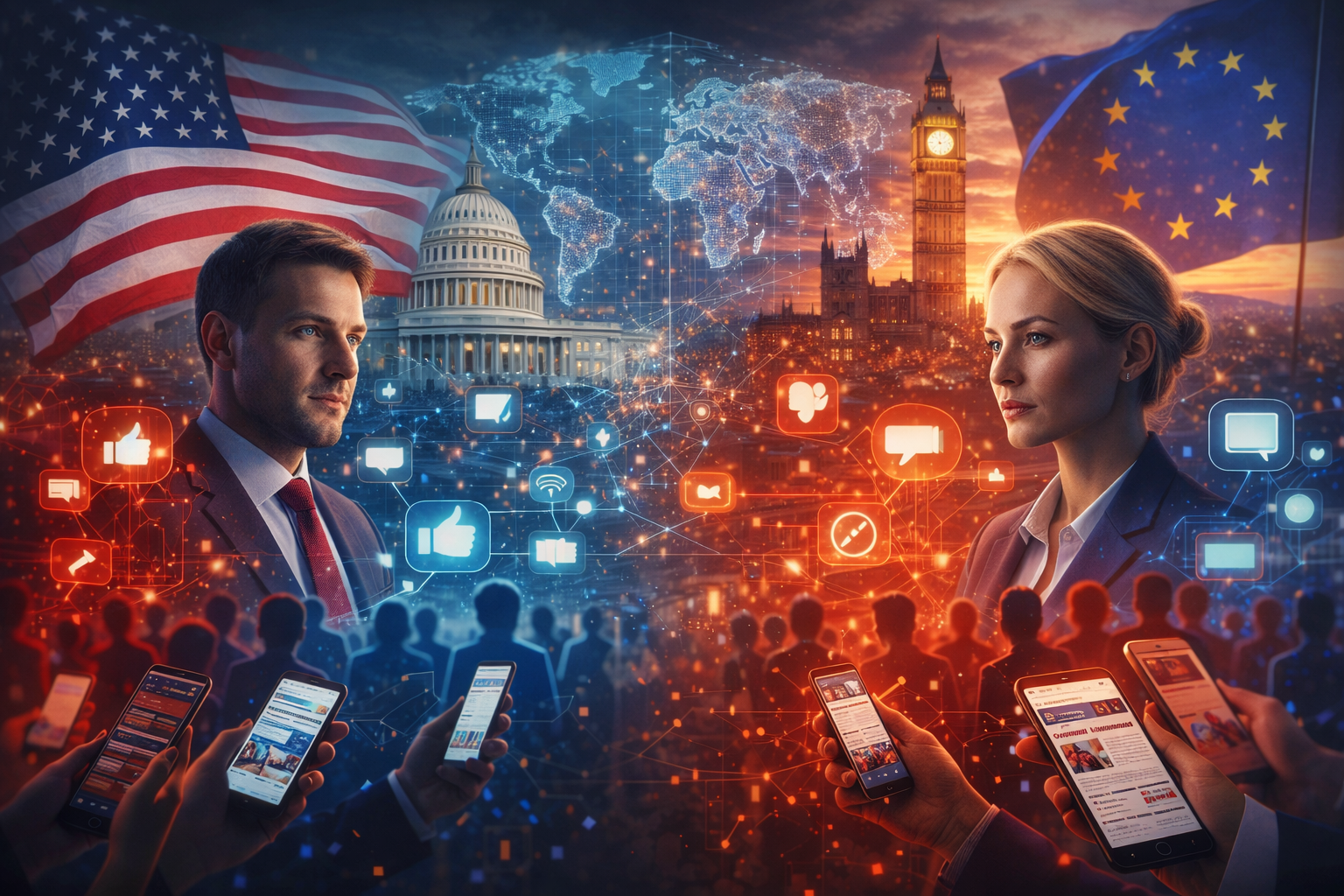
Politics in Europe and the United States is undergoing a profound transformation. Digital technology has changed not only how political messages are delivered, but also how power is exercised, debated, and challenged. From social media platforms to data-driven campaigns, politics in the West is increasingly shaped by online life.
As voters become more connected and informed through digital channels, political systems are adapting to a faster, more transparent, and often more polarized environment.
Political communication in Western democracies has shifted dramatically over the past decade. Traditional channels such as television, newspapers, and public speeches now compete with social media, podcasts, and online news platforms. Political leaders can communicate directly with voters, bypassing conventional media filters.
This direct access has increased engagement, particularly among younger audiences. At the same time, it has shortened the political news cycle, where statements and controversies can spread globally within minutes. Speed and visibility have become critical elements of modern political influence.
Social media plays a central role in shaping public opinion across Europe and the United States. Platforms function as digital town squares where political ideas are shared, debated, and amplified. Trending topics and viral content often influence which issues dominate public discourse.
However, this environment also encourages polarization. Algorithm-driven content tends to reinforce existing beliefs, creating echo chambers that limit exposure to opposing views. As a result, political debate can become more emotional and divided, challenging the principles of balanced democratic discussion.