Breaking News

Enter your email address below and subscribe to our newsletter

 Byafshena
The FIFA Men’s World Cup, played only once every four years, stands as perhaps the most eagerly anticipated event in the global sporting calendar. As the spotlight shifts to the John F. Kennedy Center for the Performing Arts in Washington, D.C. for the momentous draw, the reality of the 2026 tournament, co-hosted by the United States, Canada, and Mexico, begins to crystallize for fans worldwide. This edition marks a radical departure from tradition, featuring an expanded 48-team competition, a significant jump from the familiar 32-team format. The imminent group stage draw is set to ignite storylines that have been simmering beneath the surface, ushering in an unprecedented era for global football.
Of the 48 coveted places in the final tournament, 42 teams have already secured their berths. The remaining six spots will be fiercely contested in a series of playoff matches next spring, with placeholders like “European Playoff winner A, B, C, D” and “FIFA Playoff winner 1 and 2” being included in the draw.
Argentina, the reigning champion, has shown formidable strength, comfortably topping its CONMEBOL qualifying group. France, the 2018 champion and 2022 runner-up, remains a dominant force. European heavyweights like defending champion Spain and defeated finalist England are also widely tipped for success.
A team drawing significant attention is Morocco. Their historic semifinal run in 2022 made them Africa’s most successful World Cup team ever. The Atlas Lions have since dominated their qualifying group and appear poised to make an even deeper run in 2026.
The tournament will welcome several nations back after decades in the wilderness. Scotland, Norway, and Austria will all return, having last appeared in the World Cup in 1998. Haiti secures its first qualification since 1974.
The 2026 event will feature at least four certain first-time debutants: Jordan and Uzbekistan from Asia, the tiny African island nation of Cape Verde, and the even smaller Caribbean nation of Curaçao. With a population of approximately 156,000, Curaçao will be the smallest nation ever to participate in a World Cup. Further debutants could emerge from the intercontinental playoffs, including New Caledonia or Suriname, while Albania, Kosovo, and North Macedonia vie for a historic first appearance through the European playoffs.
Conversely, the qualification process delivered significant shockwaves. African powerhouse Nigeria stunningly failed to qualify. Even more concerning for tradition, four-time champion Italy faces the real prospect of missing its third consecutive World Cup if they fail to navigate the demanding European playoffs.
The expanded format necessitates a complete overhaul of the drawing procedure. The 48 qualified teams will be divided into 12 groups of four teams.
Teams have been allocated into four pots based on the latest FIFA rankings. The drawing process will proceed by placing one team from Pot 1 into each of the 12 groups, followed sequentially by teams from Pot 2, Pot 3, and Pot 4.
Crucially, the three co-hosts—Mexico (Group A), Canada (Group B), and the USA (Group D)—are automatically designated as top seeds and have their group placements pre-determined. They will avoid the other Pot 1 heavyweights, which include the likes of Spain, Argentina, England, France, Portugal, Netherlands, Brazil, Belgium, and Germany. They also already know the venues for their three group stage matches.
The draw is also governed by confederation constraints designed to ensure geographical diversity in the group stages:
Once the draw is complete, teams and fans will be able to map out their potential path to the final, gaining clarity on the 16 host cities they might visit throughout the tournament.
With over 20,000 possible group stage scenarios for every team, precise prediction is futile. However, analyzing the potential opponents from the pots provides a thrilling pre-draw exercise for the US Men’s National Team (USMNT).
On paper, an “easiest” draw could see the USMNT paired with:
Conversely, a “nightmare” scenario could pit the Americans against:
The 2026 World Cup is poised to feature some of the greatest names in football history, alongside a new generation of spectacular talent.
Perhaps the most visible and potentially controversial figure in the lead-up to the tournament may not be a player, but the US President, Donald Trump.
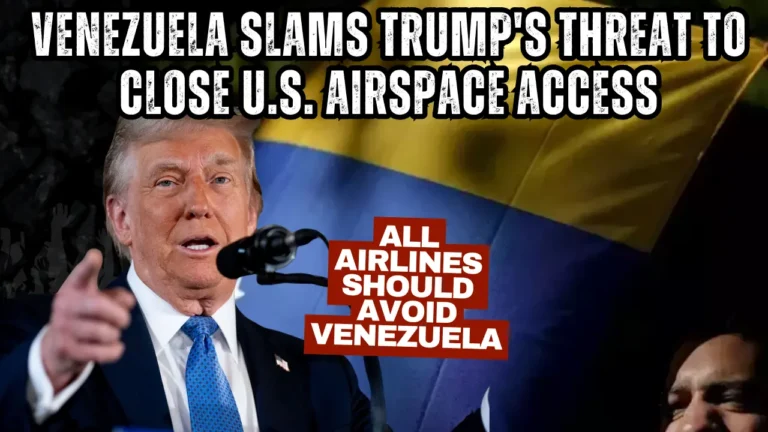
Trump, who takes credit for securing the World Cup bid during his first presidency, has maintained a high profile surrounding the event. His perceived close relationship with FIFA President Gianni Infantino has been noted, particularly following Infantino’s announcement of a new FIFA Peace Prize—widely speculated to be awarded to Trump at the draw, despite his aggressive foreign policy rhetoric, including threats against Venezuela and Mexico. Trump’s consistent use of major sporting events, from the Super Bowl to the Ryder Cup, to stay in the political spotlight suggests his prominent involvement is highly likely throughout the tournament.
Just as the previous tournaments in Russia and Qatar faced intense scrutiny over human rights records, the United States is now under the microscope of human and civil rights advocates.
Concerns have been raised that supposedly undocumented immigrants or even visiting fans could face detention and deportation without due process, an apprehension that could potentially deter supporters from traveling to the 78 matches scheduled across the 11 US cities. These fears are compounded by the already high ticket prices (significantly higher than previous World Cups) and lengthy visa waiting times, which the government has had to pledge to fast-track.
A potential foreshadowing of these issues occurred when the Iranian delegation initially threatened to boycott the draw because key personnel were not granted visas, though they later reversed the decision. Furthermore, fans from nations included in Trump’s travel ban, such as Iran and Haiti, will be unable to attend the games.
Though the draw should finalize the tournament bracket and the host venue for each game, President Trump has recently mused about the possibility of moving games from cities he deems unsafe. While FIFA has the ultimate say over any host city change, Trump may be leveraging the World Cup to pressure local governments whose policies he opposes. This uncertainty is a potential deterrent for fans planning to spend thousands of dollars to travel to cities like Boston, Los Angeles, or Seattle, who may fear the games will ultimately be relocated. The convergence of global sport and high-stakes politics ensures that the 2026 World Cup will be watched not just for the beautiful game, but for the complex drama unfolding off the pitch.