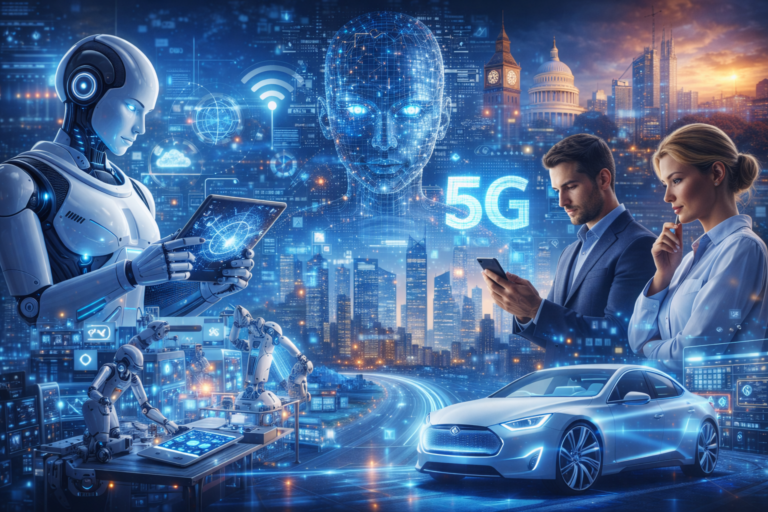
Once the stuff of science fiction, humanoid robots are rapidly transitioning from conceptual designs to tangible realities, poised to revolutionize industries, assist in daily life, and push the boundaries of artificial intelligence and engineering. These bipedal machines, designed to resemble and interact with the world in a human-like manner, represent a grand ambition: to create companions, workers, and explorers that can seamlessly integrate into our human-centric environments.
What Defines a Humanoid Robot?
A humanoid robot is characterized by its body shape, which is built to mimic that of a human, typically featuring:
- A torso, a head, two arms, and two legs.
- Bipedal locomotion, allowing them to walk and move in environments designed for humans.
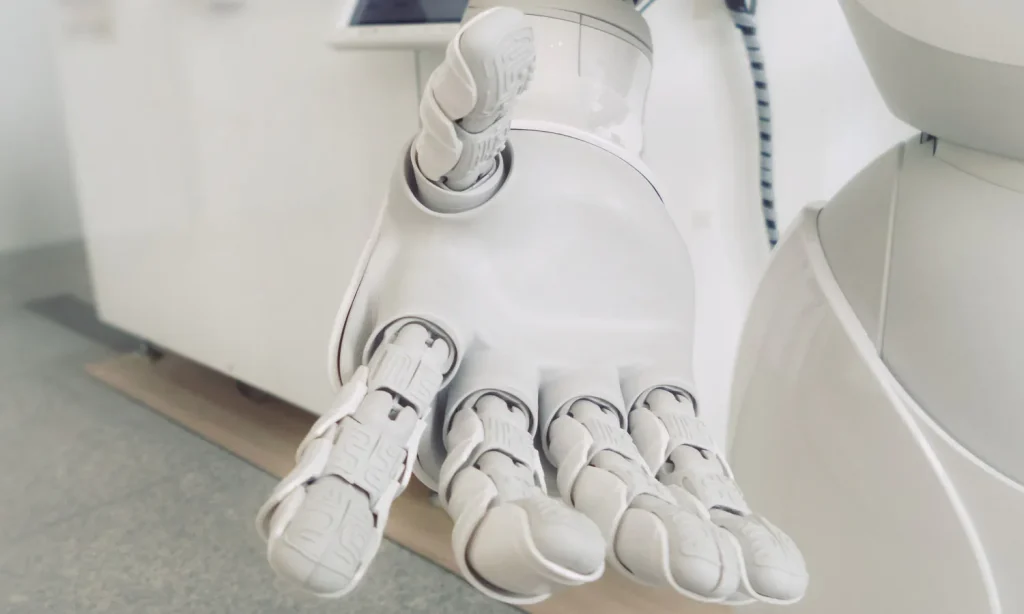
- Dexterous manipulators (hands) capable of grasping and manipulating objects.
- Often, sensors for vision (cameras), hearing (microphones), and touch, enabling them to perceive their surroundings.
The goal isn’t necessarily perfect biological mimicry, but functional similarity, allowing them to use human tools, navigate human spaces, and potentially interact with humans more intuitively.
The Drive Behind Humanoid Development
Several key motivations fuel the intense research and development in humanoid robotics:
- Versatility in Human Environments: Our world—from door handles to car interiors, from stairs to tools—is designed for humans. Robots with human-like forms are theoretically best suited to operate in these pre-existing environments without significant modification.
- Tasks in Hazardous Conditions: Humanoids can be deployed in environments too dangerous or inaccessible for humans, such such as disaster zones, nuclear power plants, or space exploration missions.
- Human-Robot Interaction (HRI): A human-like appearance can potentially foster more natural and intuitive interaction with humans, especially in service roles, healthcare, or education, by leveraging our inherent understanding of human body language and gestures.
- Scientific Inquiry: Building humanoids challenges our understanding of locomotion, balance, manipulation, and cognitive processes, pushing the frontiers of AI and mechanical engineering.
Current Applications and Future Potential
While still in their relative infancy, humanoid robots are beginning to demonstrate impressive capabilities across various sectors:
- Manufacturing and Logistics: Robots like Boston Dynamics’ Atlas (for research) and Digit (for logistics) are exploring how humanoids can perform complex tasks in warehouses and factories, often alongside human workers.
- Service and Hospitality: SoftBank Robotics’ Pepper and similar robots are used as receptionists, guides, or customer service agents in retail, airports, and hotels, providing information and basic interaction.
- Healthcare and Eldercare: Humanoids are being developed to assist the elderly, provide companionship, help with physical therapy, or even perform basic diagnostic tasks.
- Space Exploration: Agencies like NASA envision humanoids assisting astronauts on Mars or performing maintenance tasks on orbital stations, leveraging their ability to use human tools.
- Education and Research: As platforms for AI development, humanoids help researchers study machine learning, computer vision, and advanced motor control.
Challenges and the Road Ahead
Despite the excitement, significant challenges remain.
- Mobility and Dexterity: Achieving robust, dynamic balance over varying terrains and performing intricate manipulations (like picking up delicate objects) remains incredibly complex.
- Energy and Battery Life: Powering complex movements and onboard computing for extended periods is a major hurdle.
- Cost: High manufacturing and maintenance costs currently limit widespread adoption.
- Artificial Intelligence: For true autonomy and seamless interaction, humanoids need vastly improved AI for understanding context, natural language processing, and ethical decision-making.
The journey of humanoid robots is a testament to human ingenuity. As battery technology improves, AI becomes more sophisticated, and manufacturing processes become more efficient, the vision of human-like robots sharing our spaces and assisting in our lives draws ever closer, promising a future where the line between creator and creation becomes wonderfully intertwined.







 Byafshena