Breaking News




Enter your email address below and subscribe to our newsletter

 Byafshena
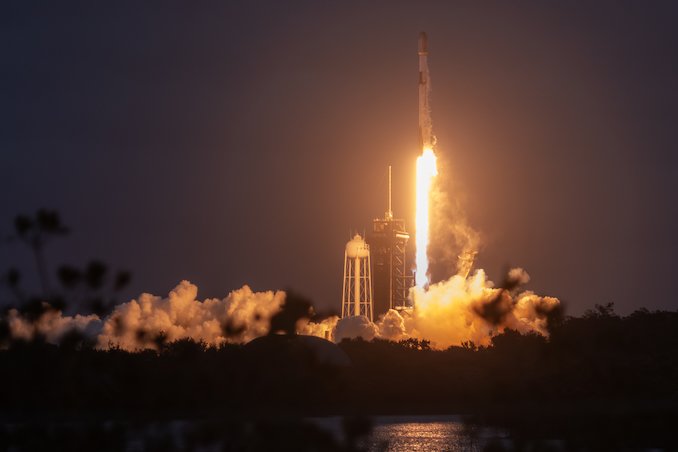
December 8, 2025, marked not just another launch for SpaceX, but a profound milestone in the history of commercial spaceflight, consolidating the company’s dominance in satellite deployment and rocket reusability. The successful liftoff of a Falcon 9 rocket from Launch Complex 39A (LC-39A) at NASA’s Kennedy Space Center initiated the Starlink 6-92 mission, a routine event on paper, yet one brimming with historical significance. This particular mission achieved dual, interconnected milestones: the delivery of the 3,000th Starlink satellite of the year to Low Earth Orbit (LEO), and, perhaps more remarkably, the flight of the Falcon 9 booster designated B1067 for an unprecedented 32nd time. This record-setting flight not only underscores the maturity and reliability of the Falcon 9 program but also propels SpaceX closer to its ambitious goals for ultra-rapid and cost-effective access to space.
The trajectory of space exploration has been fundamentally altered by the pursuit of reusability, a pursuit pioneered and perfected by SpaceX. The Starlink 6-92 mission serves as a potent demonstration that what was once considered experimental—relanding and rapidly refurbishing orbital-class rockets—is now the standard operational procedure. As the world witnessed the sleek white rocket soar into the late afternoon sky, it confirmed that the era of expendable rockets is rapidly drawing to a close, replaced by a new paradigm of frequent, routine, and highly efficient space access.
The central narrative of the Starlink 6-92 mission revolves around the remarkable longevity of its first-stage booster, Falcon 9 B1067. This specific core rocket, affectionately regarded by engineers as a fleet workhorse, shattered the previous reusability record, cementing its legacy as the most-flown orbital-class booster in history with its 32nd successful flight.
The 32nd flight is more than a numerical achievement; it is a critical engineering validation. Each successive flight validates the fundamental design philosophy of the Falcon 9: that highly stressed rocket components can withstand the immense forces of multiple liftoffs, atmospheric re-entry, and precision landings. Each mission involves a demanding cycle of ignition, ascent, separation, controlled descent, and propulsive landing. The accumulated stress and thermal cycling over 32 missions provide invaluable data, proving that SpaceX’s refurbishment and inspection protocols are robust and reliable.
This record is a pivotal step toward the company’s ambitious, publicly stated goal of certifying its Falcon boosters for up to 40 missions a piece. Achieving this threshold would dramatically shift the economic structure of spaceflight, pushing the cost per launch down to levels previously thought unattainable. The ultimate flight ceiling for any given booster, as indicated by SpaceX, is contingent upon a complex balance of factors, including the intensity of its previous missions (e.g., whether it supported high-energy deep space probes or low-energy Starlink deployments) and whether a specific launch requires the booster to be expended (e.g., for very heavy payloads or high-velocity trajectories). B1067’s continued service demonstrates the operational capacity to maintain a fleet of super-reliable, highly durable boosters.
The launch sequence on December 8, 2025, proceeded with the hallmark efficiency expected of a mature system. Liftoff from the historic Launch Complex 39A (LC-39A)—a pad famous for launching Apollo and Space Shuttle missions—occurred at 5:26 p.m. EST (2226 UTC). The Falcon 9 carried its payload of Starlink satellites on a standard south-easterly trajectory, exiting Florida’s Space Coast over the Atlantic Ocean.
The launch followed a brief but critical interruption. A planned attempt on the preceding Sunday, December 7, was scrubbed due to weather-related concerns. However, the teams returned the following day with exceptionally favorable conditions. Meteorologists with the 45th Weather Squadron had forecast a remarkable 90 percent chance of favorable launch weather for Monday, with only minor concerns regarding liftoff winds, upper-level wind shear, and booster recovery conditions. The ability to swiftly recycle the vehicle and relaunch within 24 hours is another key indicator of the system’s operational maturity, minimizing delays and maximizing launch cadence.
The Starlink 6-92 mission was intrinsically linked to the relentless expansion of SpaceX’s Starlink satellite internet constellation. This mission delivered the company’s 3,000th Starlink satellite of the year to low Earth orbit, an astonishing deployment rate that underscores the strategic importance of the network.
The figure of 3,000 satellites launched within a single calendar year highlights a profound shift in orbital mechanics and satellite manufacturing capability. This rate of deployment is unprecedented in the history of spaceflight, far surpassing the combined annual launches of virtually all other commercial and governmental entities globally. This rapid cadence allows Starlink to achieve several critical objectives:
The constant flow of Starlink missions is the engine driving the sustained profitability and operational volume of the Falcon 9 fleet. The Starlink constellation is, in effect, the ultimate proving ground for the Falcon 9’s reusability model, demanding ultra-high flight rates that no expendable system could financially sustain.
Starlink represents the leading edge of Low Earth Orbit (LEO) satellite architecture. Operating at altitudes significantly lower than traditional geostationary satellites, Starlink minimizes latency (the delay in data transmission), making it suitable for bandwidth-intensive applications like video streaming, gaming, and real-time communication.
The deployment of thousands of satellites is essential for LEO mega-constellations because, unlike high-altitude geostationary satellites, LEO satellites cover a much smaller area of the Earth at any given moment. Therefore, a large number is required to ensure continuous coverage for ground terminals globally. The 6-92 mission was one more step in realizing the vision of ubiquitous, high-speed, space-based internet access.
The ultimate goal demonstrated by the Falcon 9’s continuing reusability milestones is the attainment of near aircraft-like operational capability. SpaceX’s pursuit of certifying its boosters for up to 40 missions is a game-changer that transcends mere efficiency; it is an economic and logistical revolution.
The cost of a traditional, expendable rocket launch is overwhelmingly dominated by the non-recurrent cost of manufacturing the vehicle itself. By reusing the most expensive part of the rocket—the first stage—multiple times, the cost of manufacturing is amortized over dozens of flights. If a single booster can perform 40 missions, the production cost for that hardware becomes negligible compared to the operational cost (propellant, refurbishment labor). This allows SpaceX to offer launch prices that are fiercely competitive, effectively locking out rivals still relying on expendable launch systems. The achievement of the 32nd flight for B1067 is proof that the operational expenses for refurbishment are significantly lower than the cost of building a new rocket, creating a powerful economic moat.
While the first stage reuse receives the most attention, SpaceX is simultaneously dedicated to achieving the same level of reuse for the payload fairings—the protective nose cone atop the rocket’s upper stage. Fairings, despite being simpler than the booster, are extremely large, complex, and expensive composite structures. Full and rapid reuse of the fairings is the next essential step toward complete vehicle reusability.
SpaceX employs complex recovery techniques, often using large vessels equipped with nets to catch the fairings as they descend under parachute, or recovering them after a soft splashdown. However, unlike the first stage, which has regular public updates on its flight count, updates on the flight cadence and reusability of specific fairings are typically provided during launches for external customers (government or commercial contracts) where those details are often relevant to the payload protection guarantees. The ongoing work to standardize fairing reuse is integral to reaching the goal of lowering costs across the entire launch vehicle system.
While the Falcon 9 continues to push the limits of operational reusability, its ongoing success serves as a critical stepping stone and proof of concept for SpaceX’s next-generation fully reusable launch system, Starship.
Every successful re-entry, landing, and refurbishment cycle of a Falcon 9—including the record flight of B1067—provides invaluable data on materials science, thermal protection, structural integrity, and rapid operational turnover. This accumulated knowledge is directly applied to the design and operational procedures for Starship, which is envisioned to be fully and rapidly reusable from nose to tail. The Falcon 9’s journey from theoretical reusability to the 32-flight reality is the foundational experience upon which Starship’s success will be built.
The launch from LC-39A—a location steeped in American space history—symbolizes the blending of legacy and the future. SpaceX has significantly modernized the complex, enabling the high launch cadence necessary for the Starlink program. The ability to launch from this historic pad demonstrates how commercial innovation is driving the operational pace for both public and private sector space exploration.
The Starlink 6-92 mission on December 8, 2025, represents a significant climax of engineering dedication and operational efficiency. The delivery of the 3,000th Starlink satellite of the year underscores the massive scale of the mega-constellation project, while the record-breaking 32nd flight of Booster B1067 solidifies the Falcon 9’s status as the definitive reusable launch vehicle of its generation.
This achievement confirms that routine, ultra-frequent access to Low Earth Orbit is no longer a futuristic dream but a present-day reality. SpaceX is not just launching rockets; it is systematically dismantling the financial and logistical barriers that have constrained space exploration for decades. As the company continues its pursuit of certifying its boosters for 40 missions and beyond, the implications for satellite technology, defense, and human space exploration—particularly the development of Starship—are profound. The mission’s successful deployment of the satellites, confirmed hours after liftoff, was a quiet but powerful confirmation: the era of reusable, cost-effective, and frequent spaceflight has fully arrived, and the standard has been irrevocably set.