Breaking News


Enter your email address below and subscribe to our newsletter

 Byafshena
A Foundational Challenge to the Separation of Powers and the Integrity of Federal Law Enforcement
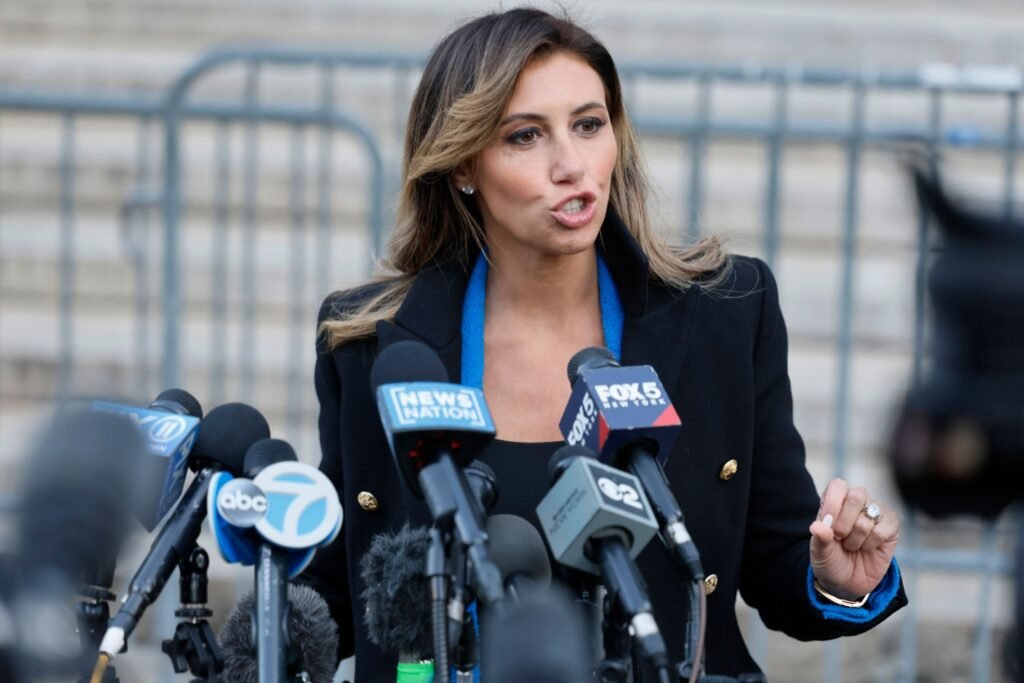
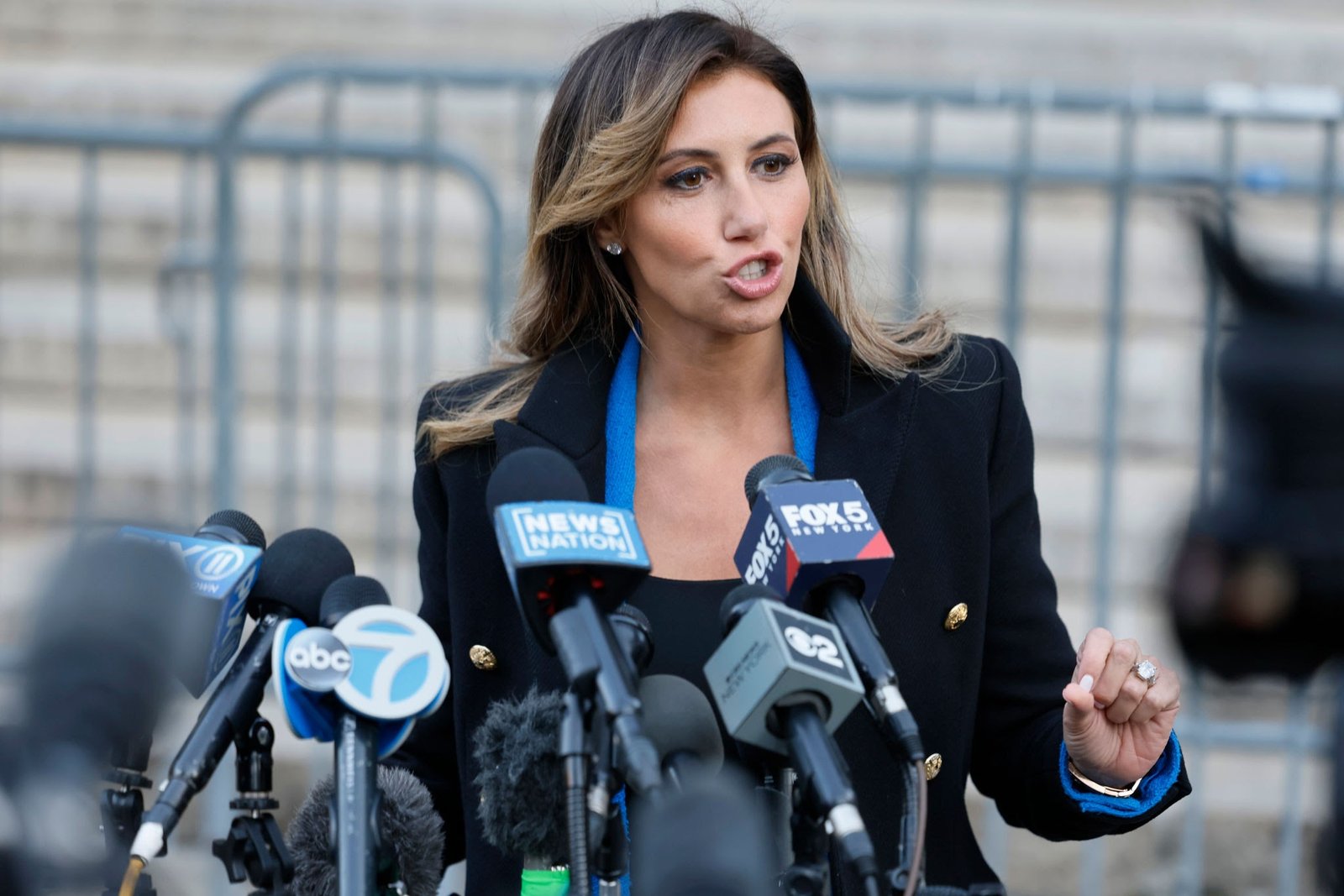
In a stunning and potentially far-reaching rebuke to executive branch appointment practices, a federal appeals court on Monday ruled that Alina Habba, former personal attorney to President Donald Trump, was serving unlawfully as the U.S. Attorney for the District of New Jersey. The unanimous decision, issued by a three-judge panel of the 3rd U.S. Circuit Court of Appeals, did not merely scold the administration’s tactics; it struck a profound blow against the attempts to bypass the Senate’s constitutional role of advice and consent, threatening to unwind a host of high-stakes legal actions taken under the authority of politically appointed, yet unconfirmed, federal prosecutors nationwide.
The ruling has instantly created a legal and administrative crisis for the Justice Department (DOJ) within the 3rd Circuit’s jurisdiction—which encompasses New Jersey, Pennsylvania, and Delaware—while simultaneously casting a long shadow over the validity of appointments and subsequent prosecutions in other critical jurisdictions across the country, from Los Angeles to Las Vegas. The core of the court’s finding is that the Trump administration employed a series of sophisticated, and ultimately unlawful, statutory maneuvers designed to install Habba in the powerful prosecutorial role indefinitely, entirely circumventing the rigorous scrutiny of Senate confirmation.
The case centers on the delicate balance of power enshrined in Article II, Section 2 of the U.S. Constitution—the Appointments Clause—which generally requires that principal officers of the United States, such as U.S. Attorneys, be appointed by the President “by and with the Advice and Consent of the Senate.” When a vacancy arises, Congress has provided mechanisms for temporary appointments, most notably through the Federal Vacancies Reform Act of 1998 (FVRA). The FVRA places strict time limits—typically 210 days, extendable under certain circumstances—on how long an “acting” official may serve without a Senate-confirmed nominee taking the post.
However, the Trump administration, faced with a highly contentious Senate that often stalled or refused to confirm presidential nominees, became adept at utilizing administrative interpretations and overlapping statutes to keep key positions filled by “acting” officials for prolonged periods. In the case of Ms. Habba, and several others, the government relied on a separate statute, 28 U.S.C. § 546(a), which allows the U.S. Attorney General to appoint a replacement “to serve until the vacancy is filled or until the expiration of 120 days after the date of designation, whichever is earlier.” Critically, this law allows the Attorney General to make serial appointments, repeatedly extending the tenure of an unconfirmed official.
The 3rd Circuit panel zeroed in on the administration’s “delegation theory,” arguing that by repeatedly re-designating Ms. Habba, the executive branch created a de facto U.S. Attorney serving without constitutional authority.
“Under the Government’s delegation theory, Habba may avoid the gauntlet of presidential appointment and Senate confirmation and serve as the de facto U.S. Attorney indefinitely,” the panel wrote in its unanimous opinion. “This view is so broad that it bypasses the constitutional process entirely, nullifying the check that the Senate is designed to perform on the Executive Branch’s selection of high-ranking officials.”
The judges recognized the immense power vested in a U.S. Attorney—the chief federal law enforcement officer for their district—and asserted that allowing the Executive Branch to maintain such a pivotal official in power indefinitely through administrative loopholes fundamentally corrupts the constitutional architecture of separation of powers. By treating the position as a perpetual “acting” role, the administration effectively turned a temporary stopgap measure into a permanent, unilateral power of appointment, a scenario the Founders explicitly sought to prevent.
The impact on the U.S. Attorney’s Office for the District of New Jersey is immediate and profound. As the chief prosecutor’s term has been ruled unlawful, a serious vacuum in leadership has been created, and, more critically, the validity of every official action taken by Habba since her designation—from approving subpoenas and wiretaps to signing off on indictments and settlements—is now under intense scrutiny.
While legal doctrines such as the “de facto officer doctrine” often shield government actions from being invalidated merely because the officer’s title was technically deficient, this ruling raises a more serious question: whether the appointment mechanism itself was so fundamentally flawed as to render the officeholder’s actions void ab initio (from the beginning). Defendants challenging their indictments now have compelling legal grounds to argue that they were prosecuted by an individual with no legitimate authority to exercise the powers of the office, moving beyond a simple technicality to a deep constitutional defect.
The Justice Department is now forced to scramble to determine who will assume leadership. A temporary solution involves the Attorney General appointing an interim U.S. Attorney under a different, more secure statutory authority, or, more likely, delegating the duties to the next most senior career official in the office. However, this administrative fix does not resolve the constitutional cloud hanging over Habba’s tenure.
The most significant aspect of the 3rd Circuit’s ruling is its potential for a national ripple effect. The same administrative “delegation theory” that the court struck down in New Jersey has been widely used by the administration in numerous other federal districts, particularly those where nominees faced partisan opposition in the Senate.
The ruling is not an isolated incident. Just the week before the 3rd Circuit decision, a district court in the Eastern District of Virginia threw out two high-profile indictments—one against former FBI Director James Comey and another against New York Attorney General Letitia James—after finding that Lindsey Halligan, the acting U.S. Attorney for that district, was also serving unlawfully. That district court decision, coupled with the appellate authority of the 3rd Circuit, has signaled a clear legal consensus emerging across the judiciary: the administration’s strategy of circumventing Senate confirmation has crossed a constitutional line.
Jurisdictions that could be immediately impacted include several key areas where the administration has relied on unconfirmed U.S. Attorneys, such as the Central District of California (Los Angeles) and the District of Nevada (Las Vegas). Attorneys representing defendants in these districts are now highly likely to file motions to dismiss, citing the Habba and Halligan precedents.
While a ruling by the 3rd Circuit is not technically binding on other circuits (like the 9th Circuit, which covers California and Nevada), appellate court decisions dealing with novel and foundational issues of constitutional law, especially when they are unanimous, are often given significant deference across the country. The uniformity of the judicial concern—demonstrated by both a district court and an appellate court—makes it harder for other federal judges to ignore the fundamental separation-of-powers issue. Should numerous other federal judges follow this precedent, the potential for mass invalidation of indictments, and the resulting chaos in federal criminal justice, is enormous.
The challenge to Habba’s eligibility was not an abstract legal exercise but was brought by a criminal defendant, Julien Giraud, Jr., who was one of three defendants to contest the U.S. Attorney’s authority in their case. The defense attorneys wisely recognized that challenging the legitimacy of the prosecutor’s office could be a potent legal strategy, transforming a routine criminal defense into a significant constitutional challenge.
Thomas Mirigliano, an attorney for Giraud, Jr., lauded the ruling, emphasizing its clarity and adherence to the constitutional design.
“The panel issued a clear and carefully reasoned decision that recognizes the extraordinary power vested in U.S. Attorneys and reinforces the limits Congress has set on who may occupy those positions,” Mirigliano stated. “We appreciate the court’s thoughtful approach and the clarity it brings to this important issue.”
His statement underscores the core principle at stake: U.S. Attorneys wield immense power—the power to investigate, the power to indict, and the power to settle cases. The Framers demanded that this power be checked by the Senate precisely because it is so significant. The 3rd Circuit’s decision is a direct reaffirmation that the Executive Branch cannot simply find ways around that check for political or administrative convenience.
The legal fight is far from over. The Justice Department now has two principal avenues of appeal, both of which are high-stakes gambits.
The Executive Branch would argue before SCOTUS from a functionalist perspective, emphasizing the administrative necessity of keeping U.S. Attorney offices fully staffed and operational, and arguing that a strict, literal interpretation of the law paralyzes the functioning of the DOJ. Opponents, including the successful defendants, would argue from a textualist and originalist position, asserting that the plain language and intent of the Appointments Clause demand Senate oversight for principal officers, and that administrative convenience cannot override the Constitution’s checks and balances.
Ultimately, the 3rd Circuit ruling on Alina Habba’s appointment has evolved far beyond a single administrative personnel issue. It has crystallized into a major constitutional showdown, a judicial reinforcement of the separation of powers, and a definitive challenge to the unchecked expansion of executive authority. The final outcome of this litigation will determine not just who leads a handful of federal prosecutor offices, but the fundamental structure by which the nation’s highest law enforcement officials are appointed for years to come.