Breaking News



Popular News



Enter your email address below and subscribe to our newsletter

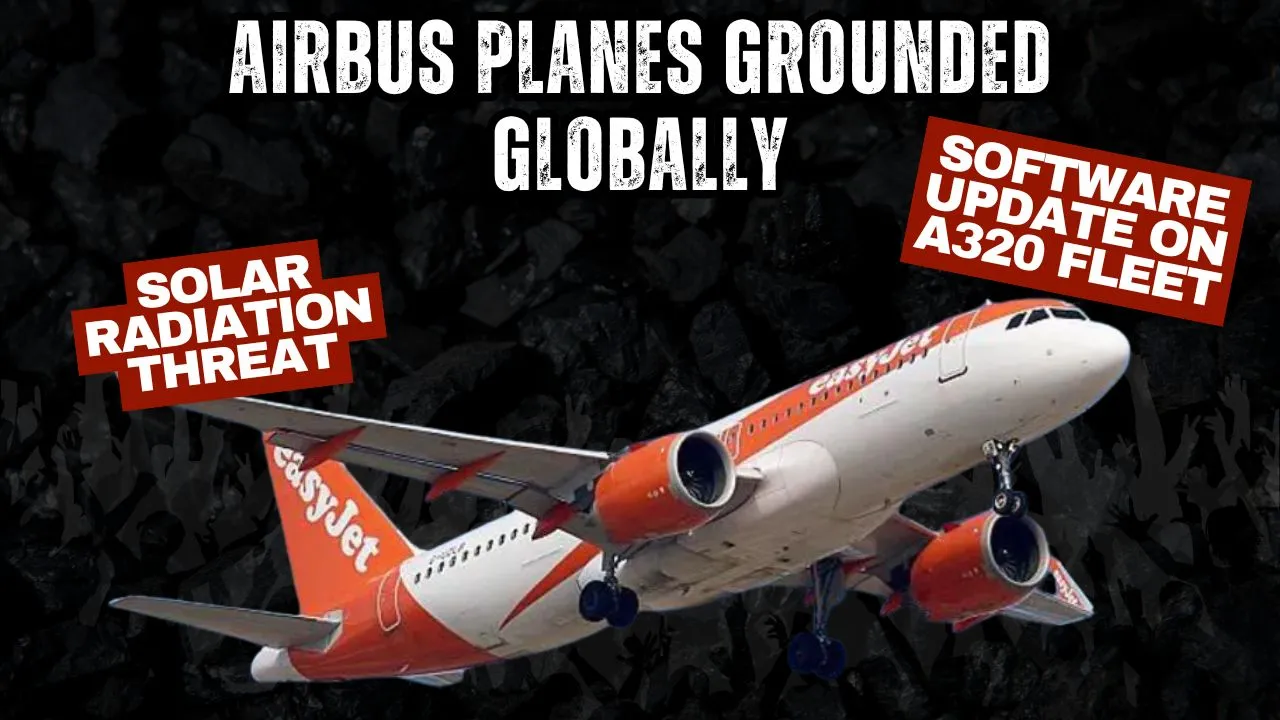
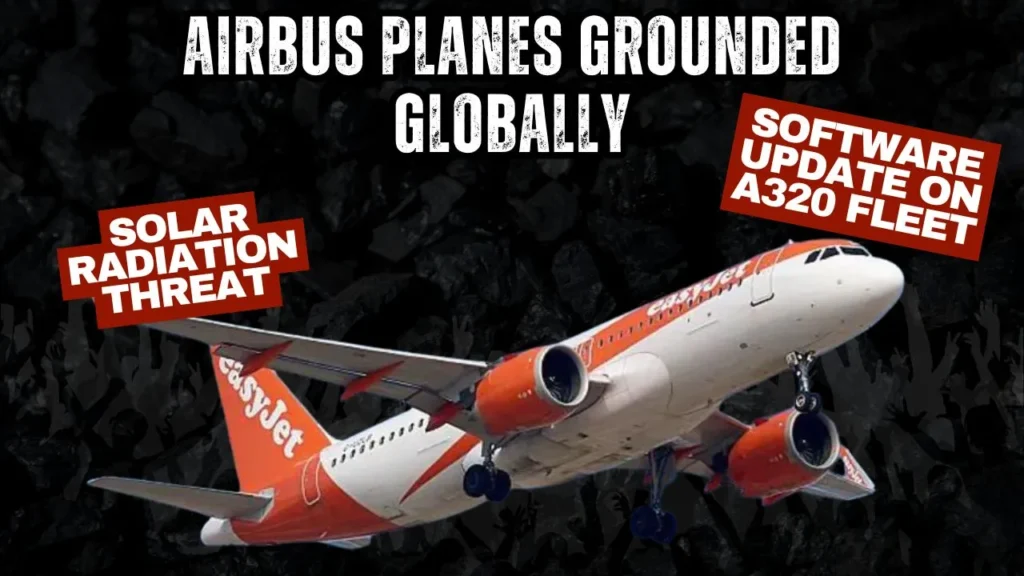
The skies across the globe just witnessed a rare and unprecedented safety event: thousands of Airbus aircraft, the workhorses of the world’s commercial fleet, were suddenly grounded. The reason? Not mechanical failure or pilot error, but a chilling vulnerability in onboard flight control computers susceptible to interference from intense solar radiation. This dramatic, precautionary action follows an alarming incident where a flight mysteriously lost altitude, sparking an urgent investigation. With up to 6,000 A320 family jets affected—representing nearly half of Airbus’s global inventory—the aviation industry is scrambling to implement mandatory software patches, causing significant, albeit localized, passenger disruption. This is not just a software bug; it’s a stark reminder of the delicate balance between high-tech aviation and the unpredictable forces of the cosmos.
The directive for immediate grounding and remediation came directly from Airbus, affecting the company’s best-selling aircraft family: the A320, A318, A319, and A321 models. This family constitutes a colossal portion of the world’s commercial air travel capacity. Initial estimates suggested that approximately 6,000 aircraft were potentially impacted by the newly identified flaw. This scale, encompassing nearly half of the European firm’s global fleet, underscores the severity of the vulnerability and the urgency of the response required from regulatory bodies and airlines worldwide.
The immediate reaction was swift and comprehensive. Regulators, including the UK’s Civil Aviation Authority (CAA), confirmed the gravity of the situation, noting that while the grounding was precautionary, it would inevitably lead to “some disruption and cancellations to flights” globally as airlines worked to comply. The swiftness of the response, however, highlights the rigorous safety protocols inherent in the modern aviation industry.
The core of the issue lies in a piece of onboard computing software responsible for calculating a plane’s elevation. Airbus’s investigation revealed that at extremely high altitudes, this specific data could be corrupted by intense radiation released periodically by the Sun.
This susceptibility is critical because the A320 family utilizes a sophisticated “fly-by-wire” system. In a fly-by-wire aircraft, the pilot’s physical actions are not directly translated to the flight surfaces (like ailerons or rudders). Instead, the pilot’s commands are interpreted by computers, which then issue instructions to the flight controls. If the computational data—such as elevation—is corrupted by external forces like solar radiation, the aircraft’s ability to maintain stable flight or execute pilot commands accurately is compromised.
This issue moves beyond typical software bugs and enters the realm of avionics safety in extreme environmental conditions, demanding an immediate, comprehensive fix.
Read More : Trump Ally Troy Nehls Quits Congress: The Growing GOP Retirement Trend
The entire crisis was precipitated by a chilling real-world event: an incident involving a flight traveling between the US and Mexico in October. During the flight, the aircraft suddenly lost altitude.
The specific event involved a JetBlue Airways flight which was forced to make an emergency landing in Florida. The abrupt, uncontrolled descent led to injuries for at least 15 people on board. While the manufacturer later confirmed this was the only time an incident of its kind had occurred, the severity of the altitude loss was sufficient to trigger a full-scale forensic investigation by Airbus. The discovery that solar radiation was the root cause elevated the issue from a singular malfunction to a systemic vulnerability requiring immediate regulatory action.
The European Union Aviation Safety Agency (EASA) responded decisively, issuing an emergency airworthiness directive. This directive is the highest level of regulatory intervention, mandating that the problem must be addressed before each plane can carry passengers again. EASA did, however, permit non-revenue “ferry flights” (flights without passengers) to allow aircraft to travel to designated maintenance facilities for the necessary updates.
The solution to the solar radiation vulnerability is not uniform across the affected fleet, creating two distinct logistical challenges for airlines globally.
For the majority of the affected aircraft—estimated to be around 5,100 planes—the issue could be resolved with a relatively simple software update. This process is understood to typically take approximately three hours per aircraft.
Many airlines were able to implement this fix swiftly. Wizz Air, for instance, confirmed that it had completed the overnight update on all its affected A320 aircraft, ensuring all flights on Saturday would operate normally. American Airlines, which had 340 affected planes, stated that the vast majority of updates would be completed within 24 to 48 hours, limiting operational delays. This rapid turnaround minimized the overall disruption for these thousands of flights.
A more significant problem remains for the remaining 900 aircraft. These are older versions of the A320 family, and on these models, the issue is not fixable via software alone. These aircraft require the physical replacement of onboard computers.
The grounding of these older jets will be prolonged, as they will not be allowed to carry passengers until the hardware replacement is completed. The duration of this grounding is entirely dependent on the availability of replacement computers and the logistical capacity of maintenance crews worldwide. This segment of the fleet represents the most substantial and enduring operational headache for the airlines involved.
Despite the sheer volume of aircraft involved, the overall impact on air travel appeared surprisingly contained, largely due to the speed of the software rollout. However, disruptions were significant in key regions.
In the UK, the impact was generally limited. London’s Heathrow Airport reported no cancellations, and Manchester Airport did not anticipate significant problems. Gatwick Airport acknowledged “some disruption.” Airlines like British Airways and Air India were reportedly not heavily impacted. This relative calm suggested that many UK-based carriers were either flying newer models or had the capacity to quickly apply the patch.
In continental Europe, the situation was more pronounced. Air France experienced noticeable disruption on Saturday morning, with several flights at Paris’s Charles de Gaulle Airport facing delays or cancellations. Easyjet, a major European budget carrier, acknowledged it was “expecting this to result in some disruption” but moved quickly, completing the update on “many aircraft” and planning a full service.
The timing of the event was particularly unfortunate in the US, coinciding with the Thanksgiving weekend, traditionally one of the busiest travel periods of the year. American Airlines anticipated “some operational delays,” but Delta Airlines expected the impact to be “limited,” suggesting rapid mitigation efforts were underway.
The most significant immediate disruption was reported in the Asia-Pacific region. Jetstar, the Australian budget airline, was forced to cancel 90 flights after confirming that approximately one-third of its fleet was impacted. Disruption was expected to continue throughout the entire weekend, emphasizing how local fleet composition and maintenance capacity dictated the severity of the crisis.
Both Airbus and the airlines acknowledged the inconvenience caused, with Airbus publicly apologizing for the “operational disruption to passengers and customers.” However, analysts and regulators were quick to contextualize the event within the broader framework of aviation safety.
Aviation analyst Sally Gethin noted that the situation was “very much out of the ordinary,” highlighting that the variability in disruption depended on the “different approaches” airlines took to software upgrades.
Tim Johnson, policy director at the UK’s Civil Aviation Authority, described the mass-grounding as “a very rare event,” but strongly reaffirmed that aviation remains “one of the safest forms of transport” due to the rigorous, proactive maintenance and safety programs in place.
UK Transport Secretary Heidi Alexander echoed this sentiment, calling the swift identification and addressing of the issue “heartening,” and demonstrating the “high aviation safety standards globally.”
Ultimately, the grounding of the A320 fleet due to the solar radiation vulnerability serves as a profound example of the high standards required in modern aviation. It demonstrates how a single, complex technical discovery can trigger an immediate, global, multi-billion-dollar response, prioritizing passenger safety above all operational costs and inconveniences. The rapid fix for the majority of the fleet showcased the industry’s technological agility, while the hardware challenge for older planes highlighted the logistical complexities that still persist.