The modern era of space exploration is defined by technological innovation that is pushing the limits of speed, distance, and autonomy. Beyond the powerful rockets and capsules of the past, new materials, propulsion methods, and computing systems are making deep space travel more feasible, cheaper, and more ambitious than ever before.
1. Advanced Propulsion Systems
To reach Mars and beyond, traditional chemical rockets are inefficient. Space agencies and private companies are investing heavily in technologies that offer higher speeds and greater fuel economy.
- Ion Propulsion: This system uses electricity (often solar-powered) to accelerate and expel ions (charged atoms) through an electric field. While the thrust is very low, it is continuous and highly efficient. Over months or years, ion thrusters can achieve speeds far greater than chemical rockets, making them ideal for deep space probes like NASA’s Dawn mission.
- Nuclear Thermal Propulsion (NTP): Considered the next major leap, NTP uses a nuclear reactor to heat hydrogen propellant to extremely high temperatures, dramatically increasing the exhaust velocity. This could cut the travel time to Mars from six to eight months down to just three to four months, significantly reducing crew exposure to deep-space radiation.
2. Miniaturization and Autonomous Systems
The trend in space technology is moving towards smaller, smarter, and more independent spacecraft, which reduces launch costs and increases mission flexibility.
- CubeSats and Small Satellites (Smallsats): These standardized, small satellites (often measured in 10 cm cubes, or “units”) are cheap to build and deploy. They have democratized space access, enabling universities, small companies, and developing nations to conduct valuable research, remote sensing, and communications experiments.
- Onboard Autonomy and AI: For missions millions of miles from Earth, where radio signals take minutes or hours to travel, spacecraft must make decisions instantly. Advanced AI allows probes to autonomously navigate, detect scientific targets, re-route around hazards, and even manage system failures without human intervention, as demonstrated by the Perseverance rover on Mars.
3. Materials and Manufacturing
The environment of space—extreme temperatures, vacuum, and radiation—demands materials that are lightweight, durable, and resilient.
- Additive Manufacturing (3D Printing) in Space: This is a game-changer for long-duration missions. Astronauts can print tools, repair parts, and possibly even habitat components on demand, reducing the massive logistical challenge of launching every item from Earth. It enables “in-situ resource utilization” (ISRU) by using local materials (like lunar dust) for construction.
- Composite Materials: Advanced carbon composites are replacing heavy metals in rockets and spacecraft structures. These materials offer superior strength-to-weight ratios, allowing rockets to carry larger payloads while improving fuel efficiency.
4. Reusable Launch Systems
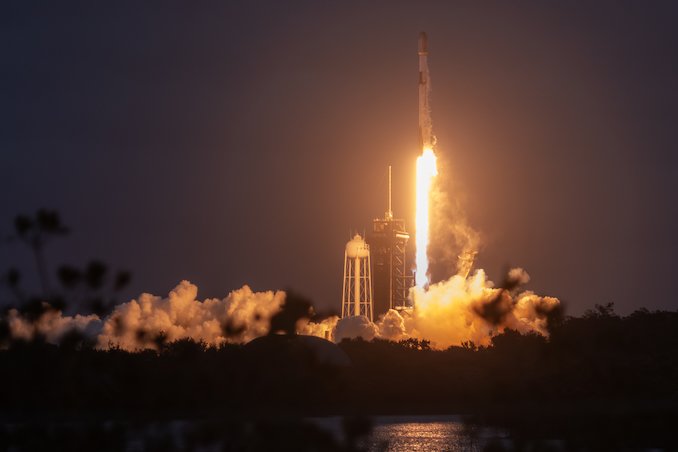
Perhaps the most impactful technological change for the space industry is the development of reusable rockets. Companies like SpaceX have successfully developed first-stage boosters that can land vertically after launch, dramatically lowering the cost barrier for sending payloads into orbit.
By lowering the cost of access to space, these technologies are accelerating plans for commercial space stations, lunar bases (like NASA’s Artemis program), and the eventual human journey to Mars, fundamentally changing our relationship with the cosmos.








 Byafshena