Breaking News



Enter your email address below and subscribe to our newsletter

 Byafshena
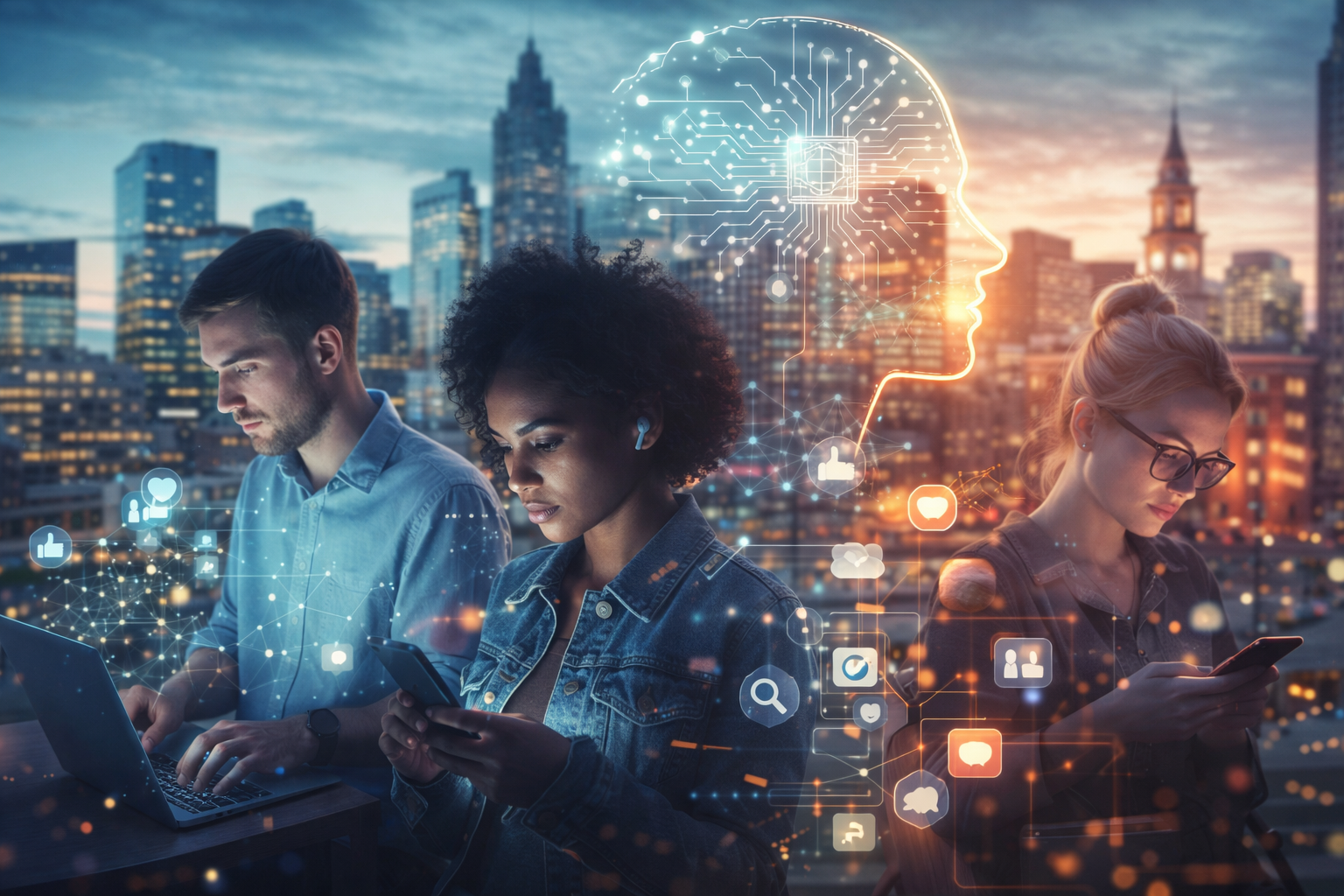
Digital culture has become one of the most powerful forces shaping modern life in Europe and the United States. What began as simple online communication has evolved into a complex ecosystem that influences how people work, socialize, express themselves, and even define their personal identity. In today’s connected world, culture is no longer confined to physical spaces—it lives online, spreads globally, and evolves at unprecedented speed.
From social media platforms and streaming services to artificial intelligence and remote work, digital culture is transforming Western societies in ways that continue to reshape everyday life.
In the digital era, identity is no longer shaped solely by real-world interactions. Online profiles, curated content, and virtual communities now play a significant role in how individuals present themselves to the world. Social platforms allow users to highlight certain aspects of their personality, lifestyle, and beliefs, creating a digital version of the self that may differ from offline reality.
This shift has led to a new cultural phenomenon: personal branding. In Europe and the United States, individuals are increasingly aware of how their online presence can impact career opportunities, social status, and financial growth. Whether intentionally or not, many people now treat their social media profiles as extensions of their professional and personal identity.
Social media platforms have become the main drivers of cultural trends in the Western world. Fashion movements, political discussions, wellness trends, and even language patterns often originate online before appearing in mainstream media. A viral post or video can influence millions, shaping public opinion and consumer behavior almost instantly.
This rapid spread of trends has also created a culture of immediacy. News, entertainment, and social issues are consumed in real time, encouraging constant engagement and participation. As a result, digital culture rewards speed, visibility, and relevance—qualities that now define modern cultural influence.
One of the most notable impacts of digital culture in Europe and the United States is the rise of the creator economy. Content creators, influencers, podcasters, and digital entrepreneurs are building full-time careers by monetizing their online presence. This shift has redefined traditional concepts of employment and success.
Platforms enable creators to earn income through advertising, brand partnerships, subscriptions, and digital products. This economic model has opened new opportunities, particularly for younger generations who prioritize flexibility, creative freedom, and remote work. At the same time, it has blurred the line between personal life and professional performance.
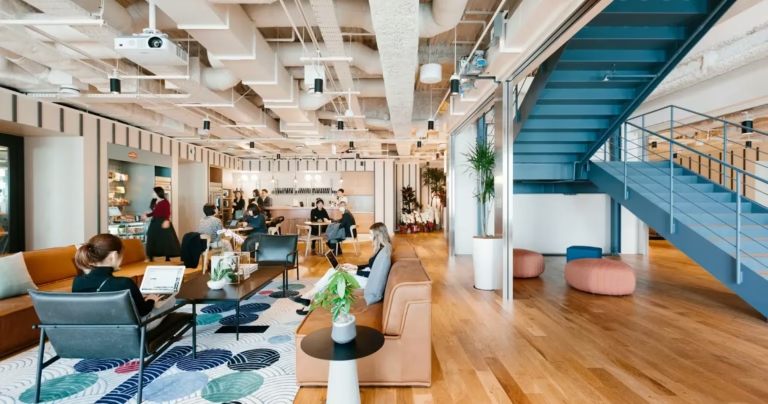
The normalization of remote work has significantly influenced Western culture. Digital tools allow professionals to work from anywhere, reducing geographical limitations and changing daily routines. Cities are no longer the only centers of opportunity, as people explore alternative lifestyles that balance productivity with personal well-being.
This cultural shift has encouraged discussions around work-life balance, mental health, and productivity. Employers and employees alike are reevaluating traditional work structures, leading to new cultural norms centered on flexibility, autonomy, and digital collaboration.
As digital culture expands, so does awareness of its psychological impact. In Europe and the United States, conversations about mental health have become more open, driven in part by online communities and awareness campaigns. Social media has played a dual role—both amplifying pressures and providing support networks.
On one hand, constant comparison and digital overload can contribute to anxiety and burnout. On the other hand, online platforms offer access to information, resources, and communities that promote emotional well-being. This balance has become a key cultural discussion in modern Western societies.
Artificial intelligence is increasingly influencing digital culture, from personalized content recommendations to automated creative tools. In Western countries, AI-driven technology is changing how people consume information, create art, and interact with digital platforms.
As AI becomes more integrated into daily life, cultural debates around ethics, creativity, and data privacy are gaining attention. These discussions reflect a broader cultural concern about the relationship between technology and human values in the digital age.
One of the defining characteristics of digital culture is its global nature. Cultural exchanges between Europe, the United States, and other regions happen continuously online. Music, fashion, and social movements cross borders effortlessly, creating a shared digital experience while still allowing for local interpretation.
This interconnectedness has led to a more inclusive but complex cultural landscape. While digital platforms unify audiences, they also raise questions about cultural identity, representation, and authenticity in a globalized online world.
Digital culture has fundamentally transformed how Western societies function. It influences identity, work, creativity, and social interaction, shaping a new cultural reality that continues to evolve. As technology advances, the relationship between digital life and human experience will remain a central topic in cultural discourse.
Understanding digital culture is no longer optional—it is essential for navigating modern society. In Europe and the United States, where innovation and media play a dominant role, digital culture will continue to redefine what it means to live, connect, and create in the 21st century.